
Traditional Portuguese Coffee vs Specialty Coffee: which brew reigns supreme?
In Portugal, coffee is not just a drink. It is a daily ritual and a reason to meet friends. Whether it is a quick bica or a morning galão, coffee connects people. Today, a new wave is changing the local coffee scene. Visitors often wonder about Traditional Portuguese Coffee vs Specialty Coffee. Both offer unique experiences for coffee lovers. Let us explore how these two worlds complement each other.
Portugal coffee culture is deeply ingrained in everyday life. The average adult drinks at least two espresso coffees daily. This tradition dates back to the 18th century. Portuguese colonists introduced the coffee plant to Brazil and Africa. Soon, public cafés started opening in Lisbon and Porto. These cafés became cultural hubs for poets and intellectuals. The classic local coffee is typically a blend of Arabica and Robusta. The Robusta beans contribute a strong, bold, and bitter flavor. The roast is usually dark, focusing on strength over complexity.
When you visit a local café, knowing the terms helps. The standard order is a single espresso. In Lisbon, locals call it a “bica”. In Porto, it is known as a “cimbalino”. If you want a double espresso with water, order an “abatanado”. A “pingado” is an espresso with a drop of cold milk. A “meia de leite” is half coffee and half hot milk. A “galão” is served in a tall glass with mostly milk. These drinks reflect the country’s preference for strong, simple coffee.
Traditional Order | Description |
Bica / Cimbalino | Standard single espresso |
Abatanado | Double espresso with hot water |
Pingado | Espresso with a drop of cold milk |
Meia de Leite | Half espresso, half hot milk in a cup |
Galão | Espresso with lots of hot milk in a glass |

While the classic local coffee remains beloved, specialty coffee is growing. Specialty coffee focuses on 100% high-quality Arabica beans. These beans offer smoother, more complex, and refined flavors. The roast profile is much lighter than traditional blends. This lighter roast highlights unique flavors from the beans’ origins. You might taste bright, fruity, floral, or chocolatey notes. Modern brewing methods also elevate the final cup. This new approach brings a refined twist to classic drinks. An abatanado becomes a carefully crafted Americano. A meia de leite transforms into a velvety flat white.
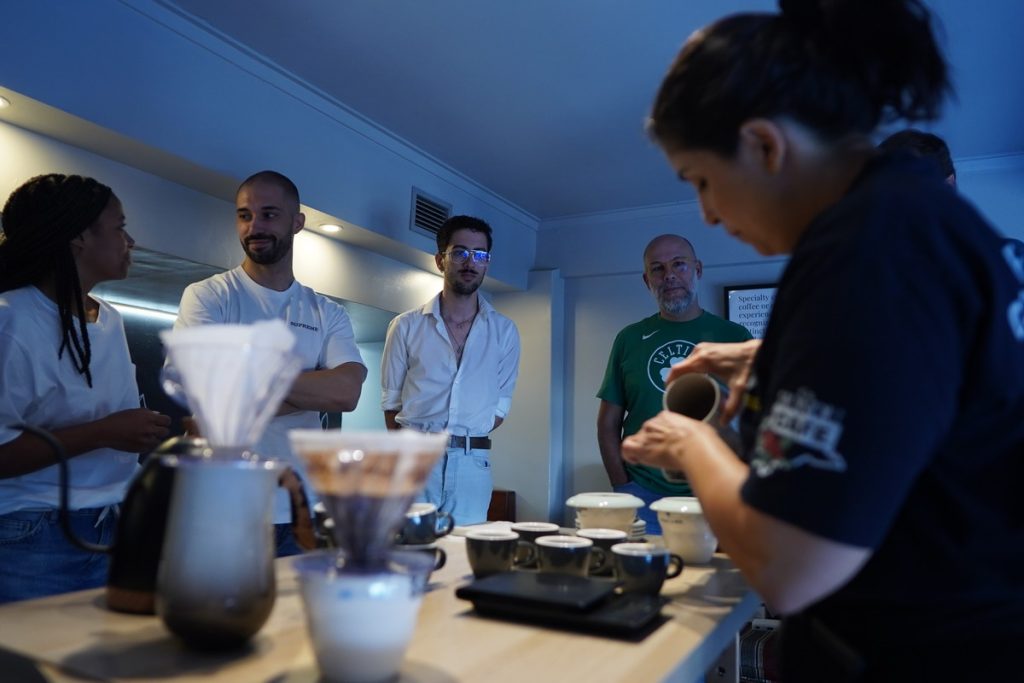
To truly understand this evolution, you must taste it yourself. My Portugal Moments offers immersive experiences for coffee enthusiasts. We provide a thoughtfully crafted travel scenario for your journey. Our team personally verifies all locations to avoid tourist traps.
Join our Lisbon coffee tasting to explore these flavors deeply. This is a guided sensory workshop led by expert baristas. You will learn the professional cupping technique to evaluate coffee. You will sample high-quality roasts and identify subtle flavor notes.
If you prefer a hands-on approach, try our brewing class. Our brewing class teaches manual brewing secrets. You will master the Drip method, French Press, and Moka Pot. You will learn how grind size and water temperature affect taste. Both experiences offer elite care and fair value.

Both styles have their rightful place in Portugal coffee culture. The traditional café offers history, connection, and a quick energy boost. It is the authentic heartbeat of local neighborhoods. Specialty coffee offers a refined, sensory journey for the palate. It celebrates the unique origins and complex flavors of the bean. We recommend trying both during your visit. Start your morning with a classic bica at a historic café. Later, enjoy a pour-over at a modern specialty roaster. This is the best way to experience the full coffee culture.

"When exploring Traditional Portuguese Coffee vs Specialty Coffee, we see a beautiful collision of history and innovation," say the experts at My Portugal Moments. "The classic dark-roasted bica represents a deeply rooted cultural ritual, while specialty brews introduce vibrant new flavor profiles. Together, they define our evolving coffee scene."
Kiryll Atamanchyk, My Portugal Moments Travel Expert

It is typically a dark-roasted blend of Arabica and Robusta beans. It is known for its strong, bold, and bitter flavor profile.
A bica is the standard term for an espresso in Lisbon. It is short, strong, and very affordable.
Specialty coffee uses 100% Arabica beans with lighter roasts. It focuses on complex flavors like fruity, floral, or nutty notes.
Yes. My Portugal Moments offers a specialty coffee tasting workshop Lisbon. You will learn manual brewing methods from expert baristas.
Not exact. We offer professional cupping techniques and sample high-quality coffees.

Post Tags :
Share :